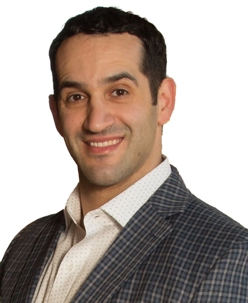
For Dr. Joseph DiChiara, pain management is a field that brings together hands-on care, problem-solving, innovation, and the chance to help patients take meaningful steps toward a better quality of life.
Drawn first to orthopedics and later to anesthesia, Dr. DiChiara found pain management to be the right fit because it allows him to work closely with patients while also using advanced procedures and evolving treatment options. His approach is rooted in movement, healthy lifestyle habits, realistic hope, and a deep respect for what patients are experiencing.
In our interview below, Dr. DiChiara shares what drew him to the field, which treatments he is excited about, and why listening closely to patients is one of the most important parts of helping them feel better.
Tell us a little about what drew you to pain management.
My initial interest was orthopedics, and I have always enjoyed hands-on, procedural work. I eventually found my way into anesthesia, which turned out to be a great field, but I did not love being in the operating room all the time.
Pain management ended up being a really good mix of everything I enjoyed. It includes clinic time, procedures, some surgical aspects, and the opportunity to help patients in a very direct way. When I rotated in pain management, I realized it brought together many of my interests in one field.
Are there any emerging treatments or techniques in pain management that you’re particularly excited about?
One of the things I love about pain management is that it is always evolving. There is a lot of innovation in the field, and there always seems to be something new on the horizon.
I have been a big fan of spinal cord stimulation for a long time. I also really like basivertebral nerve ablation. For a long time, we did not have a great therapy for discogenic pain, and now we have a treatment option that can help address certain types of pain that were harder to treat in the past.
I am also doing more SI joint fusions. Some patients get temporary relief from procedures, but when that relief does not last long enough, longer-term options can sometimes be very helpful. Surgical or more surgical approaches are not for everyone, but for the right patient, they can make a meaningful difference.
Is there a small habit or daily routine you often encourage your patients to try?
Movement. I am a big proponent of a healthy lifestyle, and diet and exercise are both very important.
When patients are living with chronic pain, it is understandable that they may want to stop moving because movement hurts. But when people stop moving, it can lead to a cycle where function declines and pain gets worse.
I try to encourage patients to keep moving their bodies, eat healthy, and do what they can to support their overall health and healing.
Is there a message or mindset you try to share with every patient you see?
I try to encourage patients to focus on the good and not only on the chronic nature of their pain.
Chronic pain can lead to depression, and depression can worsen pain. When people are hurting every day, it can start to affect their outlook on life. I try to help patients shift their focus when they can and think about what is still good in their day.
Even when pain is present, there can still be positive things to hold onto. Focusing on those things can help support a healthier mindset.
Have your patients ever taught you something that stuck with you?
Yes. They have taught me how important it is to believe what patients are saying.
It can be easy for people to assume that because a patient is being treated, they must be doing better. But if patients were doing better, they often would not still be in the office looking for help.
As I have gotten older and experienced more aches and pains myself, I have gained even more appreciation for how real and significant these conditions can be. Patients’ symptoms are valid, and it is important to trust what they are telling us.
Physicians have training and expertise, but that should never get in the way of listening to and believing patients.
How do you stay motivated in such a demanding field?
I try to keep a realistic perspective and stay focused on the bigger purpose of the work.
Some days are hard. There are demanding schedules and a lot of mental and physical energy involved. But at the end of the day, what we are doing helps patients and improves quality of life.
Even when the day feels long or difficult, I try to remember that we are helping hundreds and thousands of patients. Keeping that in mind helps me stay motivated.
After a busy day in clinic, how do you like to recharge?
I would love to say sleep, but I have three kids, so that is not always an option.
I try to practice what I preach. I go home and try to exercise, clear my mind, and stay active. Even when life is busy and I could probably use that time for something else, I try to take 30 to 60 minutes when I can to move my body.
That helps me decompress and recharge. If I am not healthy, I cannot do my best work for my patients or my family, so taking that time for myself is important.
.2504240653256.png)